
Allamaprabhu Ani
ಅಲ್ಲಮಪ್ರಭು ಅಣಿ
PhD candidate in computational mechanics and scientific machine learning at City St George's, University of London. I build differentiable simulation systems for fracture, inverse analysis, and AI for engineering.
About Me
I develop matrix-free, differentiable solvers for PDEs at the intersection of scientific computing and machine learning. I am completing my thesis while continuing the validation and development of PhAST.
I created and maintain an open tutorial series covering PyTorch, neural networks, convolutional neural networks, and Physics-Informed Neural Networks (PINNs). The tutorials were developed to assist Dr Sathiskumar Anusuya Ponnusami's teaching at Queen Mary University of London and are maintained here for wider use.
Before my PhD, I completed an MTech at the National Institute of Technology Silchar and founded Aeroknacks, where I built aerospace structural-analysis automation tools based on established hand-calculation references, including Bruhn, Niu, Boeing Design Manuals, and ESDU data.
In 2025, I worked with EPFL's Computational Solid Mechanics lab and Prof. Jean-François Molinari. That collaboration contributed to our review of machine learning for fracture mechanics.
Outside the lab, I've practiced Hindustani classical singing since I was 3. The ragas are familiar; the riyaz is the lifelong part.
Research Software & Projects
- PhAST: A PyTorch-native, GPU-accelerated differentiable physics engine I lead development and maintenance of this open, matrix-free phase-field fracture solver. The public preprint presents the formulation, benchmark verification, dynamic and quasi-static examples, million-node GPU scaling, and gradient-based scalar inverse recovery. Source · Preprint.
- Geometric Transformations A MATLAB Live Script for 2D/3D affine transforms, originally written to teach my classmates and apparently still useful.
- A small library of classical hand-calculation tools Lug strength, Cozzone plastic-bending, fastener load-transfer, ABD matrices, column buckling. Currently digitizing them into a single Python library.
Machine Learning Tutorials
Runnable notebooks and visual explainers for the path I keep using in my own work.
-
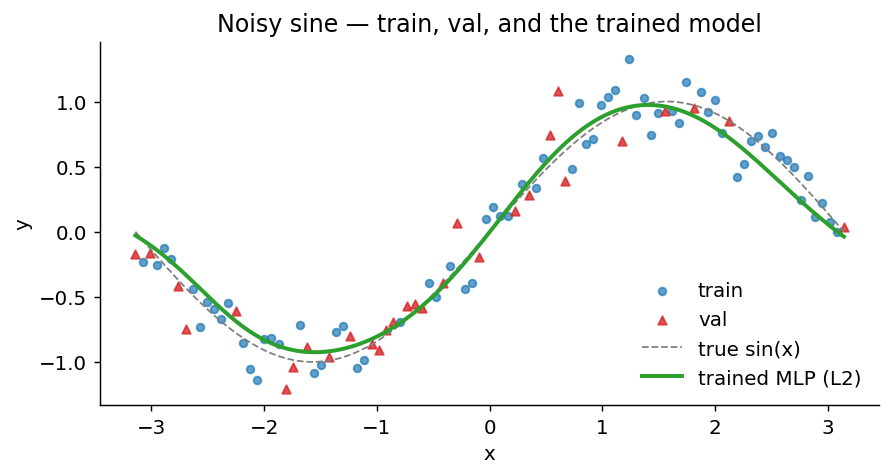
Machine Learning Training from Scratch: Loss, Gradients, and Overfitting
Reproduce the classic train-loss-down, validation-loss-up overfitting curve and learn what fixes it.
-
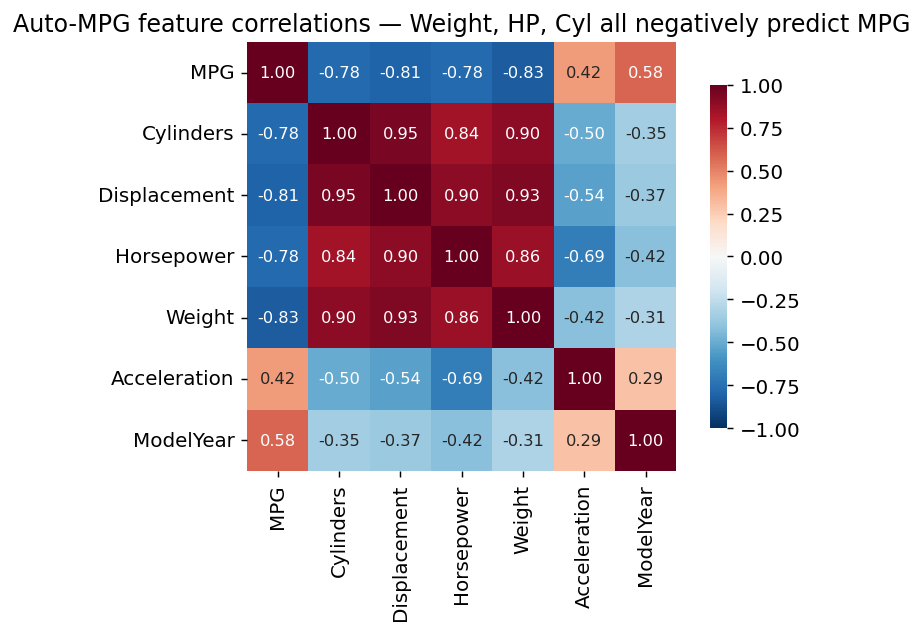
scikit-learn Regression Tutorial: Explore, Fit, Evaluate, Diagnose
Build the full tabular ML loop and see why a pretty regression line is not enough.
-
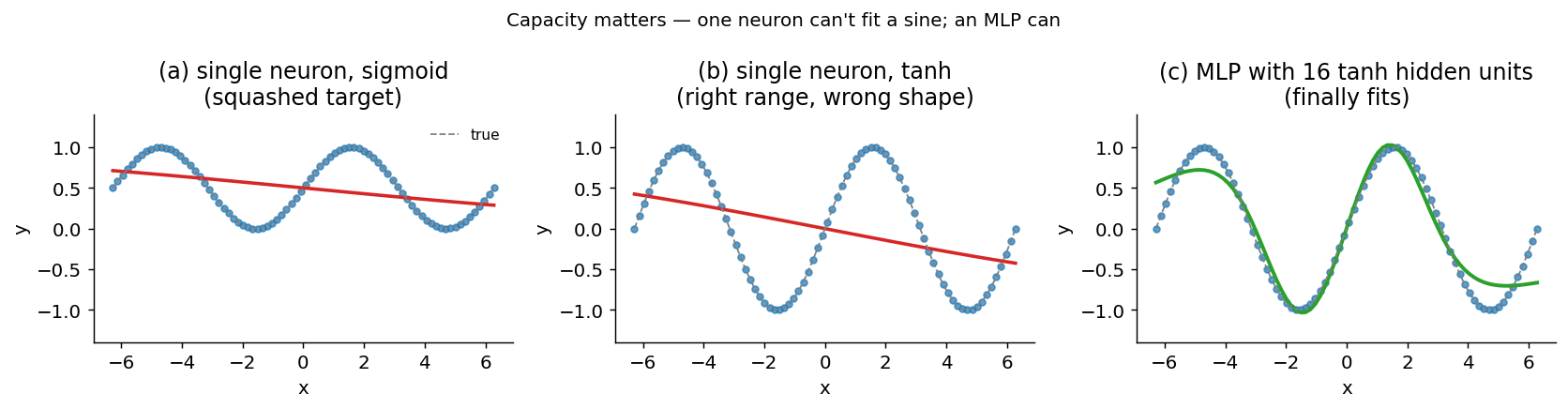
Neural Networks from One Neuron to a PyTorch MLP Classifier
See exactly when one neuron fails, why a hidden layer works, and how the same pattern becomes a classifier.
-
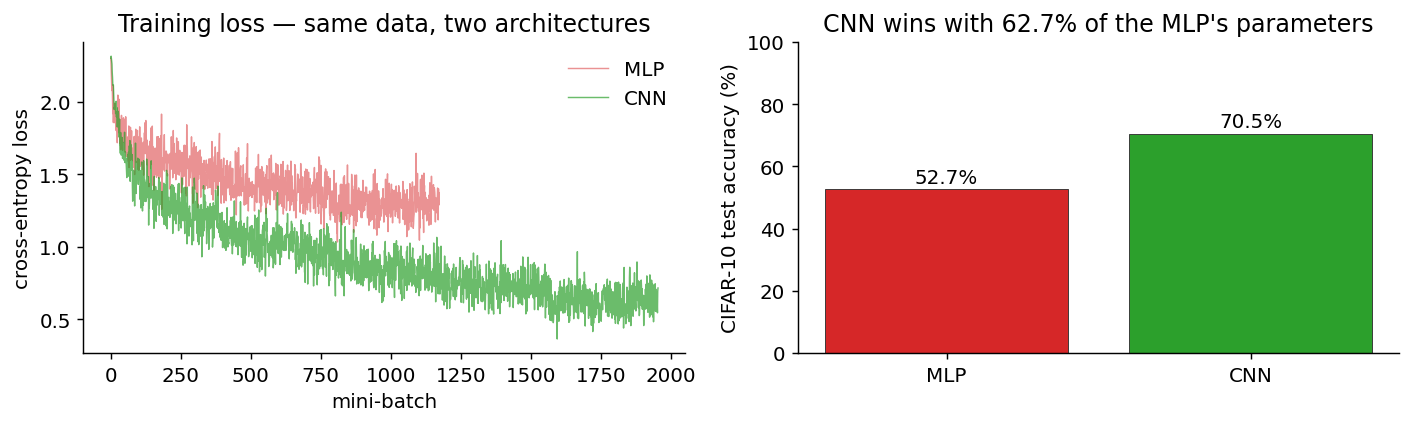
Convolutional Neural Networks from Pixels to Feature Maps
Train a small CNN, compare it with an MLP, then open the model and inspect the filters.
-
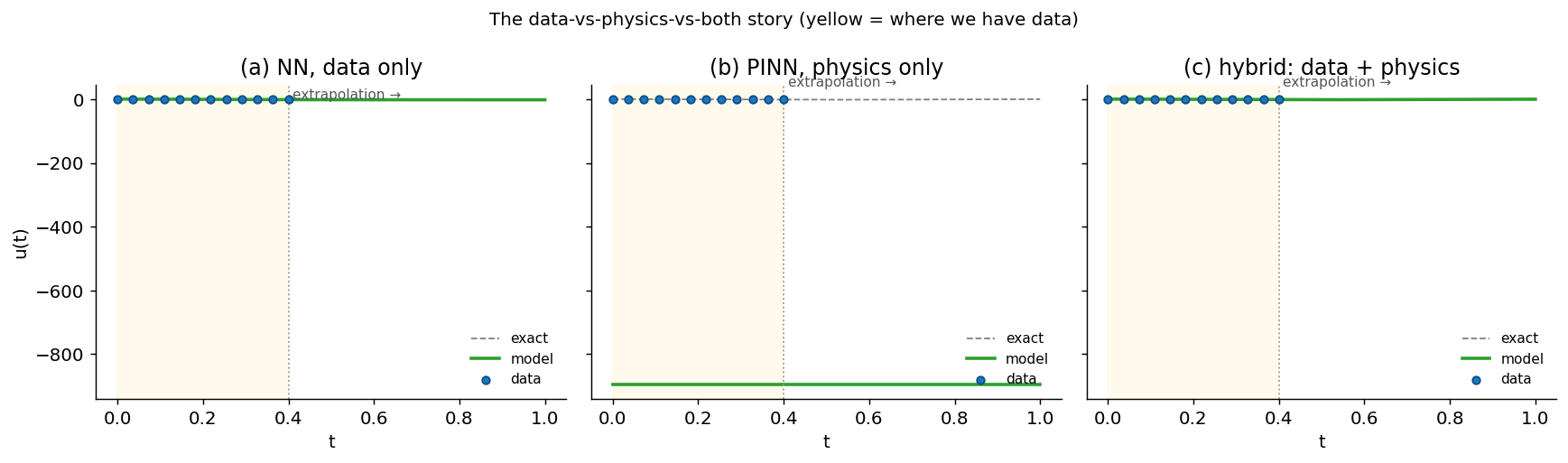
PINN Tutorial in PyTorch: Damped Oscillator, Autograd, and Inverse Problems
Use torch.autograd.grad to make a neural network obey an ODE, then turn the same idea into an inverse problem.
Recent Updates
- WCCM-ECCOMAS 2026: solver-audited learned proposals · 2026-07-28 A presentation in MS220A on keeping the fracture solver authoritative.
- Matrix-free differentiable phase-field fracture solver preprint · 2026-06-23 The PhAST solver paper is now online at arXiv.
- Software 3.0: The Case for Agent-Native Infrastructure · 2026-06-16 Building the next generation of computational tools for AI orchestration
- hello, world · 2026-04-30 first post on the blog
Publications & Recognition
- A. S. Ani, J.-F. Molinari, G. Subhash, S. A. Ponnusami. A matrix-free, differentiable PyTorch solver for phase-field fracture: Formulation, benchmarks, and inverse analysis. arXiv:2606.23458 [cs.CE], 2026. Preprint introducing the matrix-free PyTorch phase-field fracture solver, dynamic and quasi-static benchmarks, and gradient-based inverse recovery of fracture energy.
- A. S. Ani, R. Nakka, G. Subhash, J.-F. Molinari, S. A. Ponnusami. Machine learning for computational fracture and damage mechanics: status and perspectives. Engineering Fracture Mechanics, Vol 332, Art 111778, 2026. 0 cited · OpenAlex Lead-authored review of machine learning methods, validation needs, and open research questions across computational fracture and damage mechanics.
- A. S. Ani, A. B. Deoghare. Leveraging machine learning for enhanced fatigue life prediction in aluminium alloys. Lecture Notes in Mechanical Engineering, Dec 2024.
- Mar 2026 · Yeoman and Travelling Scholarship, Worshipful Company of Tin Plate Workers alias Wire Workers. Supported presentation and dissemination at WCCM-ECCOMAS 2026.
- Apr 2026 · SST Dean's Award for Outstanding Teaching Support, City St George's.
- 2026 · Member, Royal Aeronautical Society.
- 2023-2026 · Fully funded PhD scholarship, Modelling for Failure Analysis studentship, City St George's, University of London.